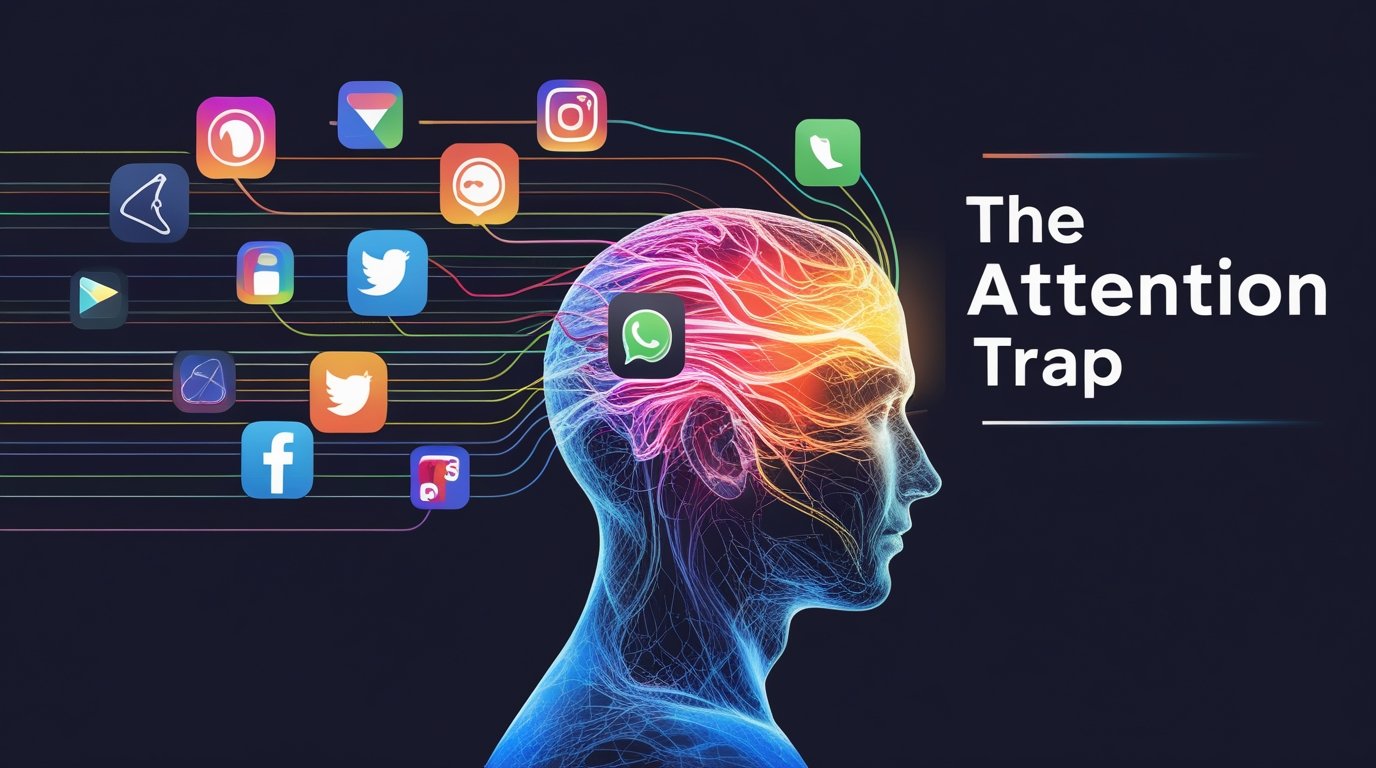
In today’s Hyperconnected world, social media has become both a playground and a battlefield for the youth. What once began as a platform to connect with friends and share ideas has evolved into a powerful machine that shapes thoughts, behaviors, and even national narratives. The problem is not simply the existence of these platforms, but the way they exploit the most precious resource we have our attention. This exploitation comes at a cost: distraction, division, and a generation caught in the loop of endless scrolling.
The Business of Controversy:
It is no secret that drama and conflict sell. Influencers and platforms have learned that nothing captures attention faster than a controversy. Take the well–known feud between creators like Elvish Yadav and Maxton. What looked like a personal fight soon revealed itself as a staged spectacle, leading to a song release that collected millions of views within hours.
This pattern is not accidental; it is by design. A fight or controversy ensures that fans and critics alike engage with the content, debate endlessly, and keep returning for updates. The result? Massive attention, skyrocketing searchability, and higher market value for the influencers involved. In this cycle, the audience becomes both the fuel and the product, giving away hours of their life to events that bring no tangible improvement to their own reality.
Polarization as a Strategy:
One of the most dangerous outcomes of this attention economy is polarization. Max Fisher, in his book The Chaos Machine, describes how social media algorithms amplify divisions, creating “us versus them” dynamics. Supporters line up on one side, opponents on the other, and what could have been a healthy debate turns into digital warfare.
Hashtags like “I Stand With…” create a false sense of solidarity while doing nothing to address real issues. Young people shout their allegiance online, but when it comes to their own struggles with jobs, health, and education, these influencers and communities rarely show up. Polarization is not about truth or justice. It is about keeping people divided enough to remain engaged. This ensures platforms can continue to sell ads and influencers can continue to monetize outrage.
Fake Attention and Its Consequences:
The hunger for visibility has led many influencers to take dangerous shortcuts. Some fake illnesses, others fake deaths, and many create exaggerated scandals just to trend. Internationally, we saw cases like Gibson, who fabricated a story about brain cancer to gain sympathy, followers, and donations. In India, influencers regularly stage fights or announce shocking news, only to reveal later that it was a “publicity stunt.”
The tragedy is not just the deception itself, but the cost it imposes on followers. Millions invest their emotions, time, and even money into these hoaxes. And while influencers may walk away with fame and profit, the audiences are left with wasted hours and misplaced trust.
When Attention Turns Dangerous:
The darker side of influencer culture reveals itself in the promotion of harmful products. Betting and gambling apps, disguised as entertainment, are pushed aggressively by popular creators. For young people in small towns and villages, the endorsements appear credible. They trust the influencer and download the app.
But gambling is not a game it is a trap. Stories of financial loss, depression, and even suicide linked to online betting are rising. A young man from Visakhapatnam ended his life after losing heavily on such an app. His trust in the influencer’s promotion became the reason for his downfall. When attention is captured irresponsibly, the consequences can be devastating.
The Algorithm Knows Your Weakness:
The difference between India and countries like China highlights how algorithms are shaped. In China, platforms like Douyin restrict content to educational, scientific, and creative areas. Short videos promoting nudity, polarization, or violence are never allowed to trend.
In India, however, algorithms thrive on sensationalism. A glance at trending reels reveals a pattern: hypersexualized dances, meaningless memes, and shallow controversies dominate the feed. The more the audience consumes, the more similar content is served. This creates a vicious cycle where growth–oriented, productive content is drowned out by mindless entertainment.
The truth is simple: algorithms don’t just show us what we like; they condition us to like what they show. The longer we watch, the more data they collect, and the more precisely they can manipulate our focus.
The Erosion of Focus:
Psychologist Herbert Simon once observed: “A wealth of information creates a poverty of attention.” This paradox defines the modern youth experience. With infinite content available at every swipe, concentration is collapsing. Studies reveal that human attention span has now fallen to eight seconds less than that of a goldfish.
Even more concerning, research from the University of California found that once attention is broken say, by checking a notification it takes an average of 23 minutes to return to deep focus. Imagine the productivity lost when students or professionals check their phones dozens of times a day. In chasing updates on influencer drama, entire futures are quietly being stolen.
Learning from Ancient Wisdom:
While the technology is new, the challenge of focus is not. Ancient philosopher Epictetus advised: “Keep your attention focused on what is truly your own concern. What belongs to others is none of your business.” Today, this wisdom rings louder than ever.
It is not wrong to admire creators, enjoy entertainment, or follow trends. But the danger begins when we let ourselves be drawn into online battles that add no value to our lives. Supporting one influencer over another does nothing to improve our health, careers, or relationships. Worse, it feeds a culture of violence, hate, and distraction.
From Distraction to Growth:
The attention trap does not mean we must abandon social media entirely. Instead, it requires us to consciously redirect our focus. Content that educates, inspires, or strengthens relationships is worth consuming. Content that weakens focus, promotes negativity, or wastes time must be consciously rejected.
As Oprah Winfrey famously said: “Where focus goes, energy flows.” The principle is universal: whatever we give our attention to will expand in our lives. If we invest in distractions, distractions will grow. If we invest in learning, growth will follow.
Conclusion:
The greatest tragedy of today’s youth is not lack of talent or opportunity; it is misplaced focus. In giving away our attention freely, we empower platforms, influencers, and industries that profit from our distraction. The cost is not just time, but mental health, productivity, and even societal unity.
But the power to change lies in our hands. By choosing where to invest our focus, we can either fuel the fires of division or build lives of meaning and progress. Attention is not infinite. Once spent, it cannot be reclaimed.
In the end, the choice is clear: stay trapped in the cycle of division and distraction, or guard your attention and use it to design a better future. The trap is real, but so is the way out.
FAQs:
1. What is the “attention trap” in social media?
The attention trap refers to how social media platforms exploit human focus by keeping users hooked through controversies, endless scrolling, and sensational content. This results in distraction, division, and a loss of productivity among youth.
2. Why do influencers and platforms create controversies?
Controversy is a proven way to capture attention. Staged fights, feuds, and drama generate debates, trending hashtags, and repeated engagement. This benefits influencers with fame and platforms with ad revenue—while audiences lose time and energy.
3. How does social media create polarization?
Algorithms amplify “us vs. them” dynamics, pushing people into opposing camps. This digital polarization makes users feel strongly connected to online movements, but in reality, it does little to solve real issues like education, jobs, or health.
4. What are the dangers of fake or harmful influencer promotions?
Many influencers fake stories, illnesses, or promote gambling apps and unsafe products just to gain followers or money. For young audiences, such promotions can lead to financial loss, emotional harm, or even tragic consequences like depression and suicide.
5. How can youth escape the attention trap?
The solution lies in consciously redirecting focus. Consuming content that educates, inspires, and adds value leads to growth, while rejecting negativity, mindless trends, and staged drama helps preserve attention, productivity, and mental health.