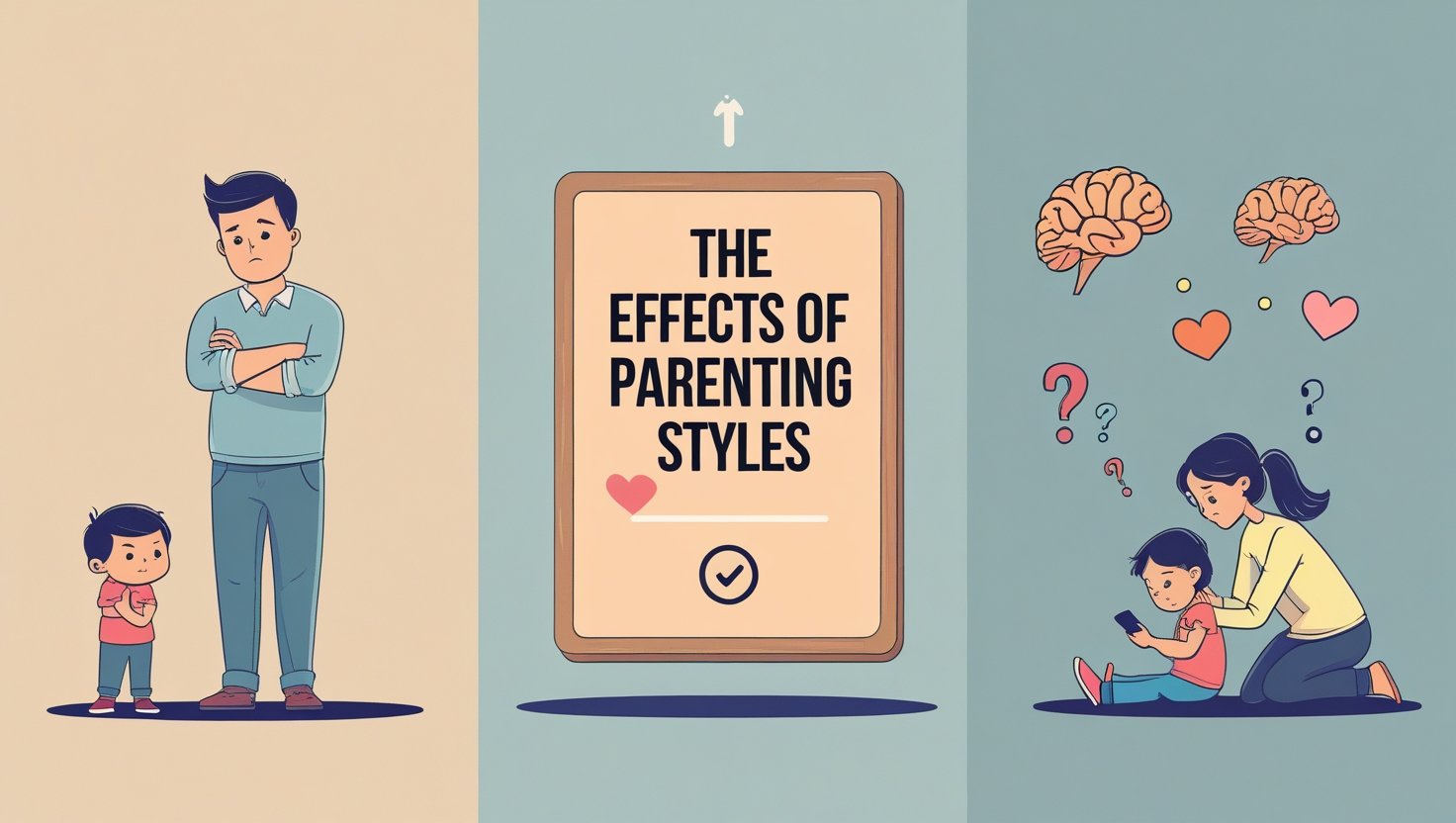
Parenting style means how parents interact with their children, how they guide them, and how they shape their decisions. Every parent has their own unique style, but in psychology some common styles have been categorized such as authoritative, authoritarian, permissive and neglectful parenting. Each style affects the child’s personality, emotional development, and future behavior. When a child is raised in a specific environment, his or her confidence, self-worth, and decision-making ability are determined by that environment. Parenting is not just about eating or drinking or giving advice, but it also includes emotional support, boundaries, and daily interactions.
It is also important to understand that no parenting style is perfect, but some styles have more positive impact and leave some negative effects that stay with us from childhood till adulthood. Today in the digital era where there is a lot of distractions and stress, a strong and balanced parenting approach has become even more important. In this blog, we will explore different parenting styles, assess their long-term effects and understand which method can be more beneficial for the child’s better upbringing and development.
Authoritative Parenting and Its Positive Outcomes:
Authoritative parenting is a style where parents maintain a balance between discipline and love. They have expectations for their children, but also make them understand and support them. Such parents tell their children the rules but also answer their questions. This style develops responsibility and confidence in children. Children understand that there are consequences of their actions, but they also get support at all times. Children brought up in such an environment are emotionally strong, independent, and socially active. Their self-esteem is high, and they are confident in making their own decisions.
The biggest benefit of authoritative parenting is that the child learns the balance between respect and freedom. When the child sees that his opinions are being heard and he is getting respect, he naturally becomes cooperative and responsible. Such children perform very well in school life, and their behaviour is also positive with teachers and classmates. In the long term, such children become good professionals, leaders, and parents. Their communication skills are strong, and they can handle stress well. This parenting style lays the foundation for healthy emotional development, which is useful throughout life.
Authoritarian Parenting and the Development of Fear or Rebellion:
In authoritarian parenting, parents are very strict. They impose rules on everything and expect only obedience from the child. In this style, love and emotional connection are less. Parents only impose their orders and punish if the child does not follow them. In such an environment, the child does not develop confidence and remains afraid all the time. When the child is unable to express his feelings, he either becomes overly obedient or rebels. Rebellion means that he secretly breaks the rules, tells lies, or becomes short-tempered. Due to a lack of emotional bonding, the child becomes distant from his/her parents.
The long-term effect of this is that such children are either weak in decision-making or always challenge the authority. Their stress level is high, and they can suffer from anxiety or depression. Trust in their relationships is also very low. When the child only faces rules and punishments, he/she does not develop empathy and communication skills. This style has a bad effect on school performance, social behaviour, and mental health. Every parent should maintain discipline but with love and understanding; otherwise, the emotional system of the child gets disturbed.
Permissive Parenting and Lack of Discipline in Children:
In permissive parenting, parents are softer with their children. They let them do whatever they want in everything and do not put much emphasis on discipline. Such parents usually give a lot of love but do not put any boundaries. They try to fulfill every demand, whether it is right or not. This is why it is difficult for the child to understand that there is a limit to every task. When there are no rules and boundaries, the child does not learn self-control. He tries to do whatever he wants all the time and does not tolerate frustration. Such children face problems in school because discipline and time management are required there.
In the long term, their behaviour is impulsive; they take every decision in a hurry and do not think about the consequences. Their patience level is low and they have more emotional outbursts. They also have problems in relationships as they do not understand how to respect others’ boundaries. Permissive parenting does not mean that love should not be given, but if discipline and limits are not there, then the child does not mature. A healthy balance is necessary, where the child should also feel love and understand that every action has a consequence. Only in such an environment can an emotionally stable and responsible person be created.
Neglectful Parenting and Emotional Detachment
Neglectful parenting means that parents are emotionally or physically distant from their children. They neither take care of them nor give them time. Such parents are either busy with their own lives or are not interested in parenting. There is neither love nor rules in this style. The child feels that he has no value and, no one cares about him. This emotional detachment leaves a very deep impact on the child. He feels insecure, his self-esteem is low, and he uses the wrong methods to get attention. Children brought up in such an environment suffer from depression, anxiety, and behavioral problems. They do not trust anyone, are emotionally distant in relationships, and are also weak in decision-making.
When a child sees that he has no one, he either becomes extremely rebellious or completely passive. In the long term, such people lose direction in their lives. Academic and career life is also affected. Every child wants his parents should spend time with him, explain things to him, and guide him. When he does not get all this, he feels alone. This is why neglectful parenting causes the most emotional damage. Children need time, attention, and guidance, otherwise, they feel the lack throughout their lives.
How Parenting Styles Shape Future Relationships and Behavior:
The impact of parenting style is not limited to childhood, but it is life-long. Each style shapes children’s thinking, emotional strength, and relationships. Children raised under authoritative parents have strong communication skills, build relationships based on trust and understanding. They know how to resolve conflict and are emotionally stable. On the other hand, children raised under authoritarian parenting either fear their parents or try to control them all the time. They are overwhelmed by emotional expressions. The effects of permissive parenting include immature relationships where the child is overwhelmed by responsibility. He does not know the boundaries and hence becomes a victim of unhealthy relationships. The effects of neglectful parenting are the most intense.
Such people run away from emotional bonding, do not trust, and often feel lonely. They either become emotionally numb or face dependency issues. The style of parenting determines how strong a partner, friend, or parent the child will become in the future. Every mother and father needs to understand that their role is not just for today but is a fundamental part of the child’s tomorrow. The child who is brought up with love, guidance, and balance performs well in every relationship in life. Parenting is not just a responsibility, it is a way of building a life.
Conclusion:
Every mother and father’s style, their love and their devotion are not just a one-time guidance for the children, but it determine their entire life. The way a child is treated at home reflects in their personality, decisions, and future relationships. If the parents maintain a balance and give love and discipline wisely, the child becomes an emotionally strong, responsible, and confident person. But if parenting is either too strict or completely indifferent, the child may develop fear and anxiety, or become rebellious or emotionally distant.
The love, guidance, and limits received in childhood are the tools a child uses to become successful in adult life. Every word and action of parents sends a message—either of support or of disapproval. That is why every parent should build an active connection with their children, listen to what they say, understand them, and respect their emotions. The time and attention given today can become the basis for their better needs tomorrow.
Good parenting is a process that can be improved with learning, understanding, and time. Every child is different, so flexibility and love are very important in every parenting style. When a child feels emotionally secure, they can confidently face any challenge in life.